Showing posts with label Left Coast Crime 2012. Show all posts

17 April 2012

Teen Tuesday

Many of you know that I used to be a young adult librarian before I switched to working part-time.  I love YA books, and still review for VOYA.   Thus, I've decided Tuesdays on Stuff and Nonsense will be devoted to Young Adult literature.
I just moderated a panel on children's and young adult mysteries at Left Coast Crime in Sacramento the last weekend of March.  In preparation, I read books by the four authors on the panel:  Bonnie Hearn Hill, Sophie Littlefield, Linda Joy Singleton and Penny Warner


Bonnie Hearn Hill writes a series called Starcrossed, with protagonist Logan McRae, who is a high school sophomore in the fictional town of Terra Bella Beach, California.  In the first book, Aries Rising, the aspiring writer has been working hard to convince her teachers to recommend her for a summer writing camp.  When she stumbles across a book called Fearless Astrology, she learns how to create and read astrological charts, a skill she uses on her classmates, family and teachers to try to understand them.  This is a quick, enjoyable read for grades 6 and up.

The prolific Sophie Littlefield's young adult series consists of two books, entitled Banished and Unforsaken, about sixteen-year-old Hailey Tarbell, who can't wait for the day she'll leave Gypsum, Missouri, far behind, taking only her four-year-old foster brother Chub. But when a freak accident in gym class leaves a girl in critical condition, Hailey feels drawn to lay her hands on the injured girl and an astonishing healing takes place. Before Hailey can understand her new powers, a beautiful stranger shows up and saves her and Chub from a group who will stop at nothing to harness her gifts to create an undefeatable army of the undead. Hailey and a small but determined family of healers are forced to face this company and stop them.

Linda Joy Singleton has been writing for young people for years.  Her most recent book is Buried, the first of The Goth Girl mysteries, spun-off from the six-book Seer series.  The first book in The Seer is Don't Die Dragonfly, which introduces us to Sabine Rose, who, after being kicked out of school and sent to live with her grandmother, is determined to become a "normal" teenage girl. She hides her psychic powers from everyone, even from her grandmother Nona, who also has "the gift." Having a job at the school newspaper and friends like Penny-Love, a popular cheerleader, have helped Sabine fit in at her new school. Yet, Sabine can't seem to get the bossy voice of Opal, her spirit guide, out of her head . . . or the disturbing images of a girl with a dragonfly tattoo. Suspected of a crime she didn't commit, Sabine must find the strength to defend herself and, later, save a friend from certain danger.

 Another prolific author who writes for both adults and young people is Penny Warner, whose most recent series is called The Code Busters Club.  The first book, The Skeleton Key, tells the story of four middle school kids.  Cody Jones, Quinn Kee, M.E. Esperanto and Luke LaVeau are four middle-school kids who, though very different from each other, have in common the love of codes and ciphers.  They even have a clubhouse, for which the entry password changes daily.  When Cody notices what appears to be a code scratched in a window of the house across the street, the conclude that the strange old man who lives there is in trouble and set out to learn what it is and what they can do to help.

It was a fantastic panel. There was a good-sized crowd, and I didn't say anything too stupid.  If, for some reason, you'd like a recording of the panel, you can order one here.

12 April 2012

Mining for Murder -- The Haul

I didn't purchase as many books as usual at Left Coast Crime this year.  I'm not sure why.  Anyway, here are the books I bought:

A Killing Winter (Leo Desroches #2) by Wayne Arthurson (Tom Doherty/Forge hardcover, 10 April 2012).

Leo Desroches, a half-Cree, half–French-Canadian reporter in Edmonton, returns in A Killing Winter, the sequel to Wayne Arthurson’s lauded debut murder mystery Fall from Grace. Undercover as a homeless man, Leo’s got his hands full both on the job and in his personal life. As he tries to reconnect with his estranged son and fight his urge to gamble, he is consumed by a story that turns into a personal crusade: a search for a missing Native street kid he’s befriended. When the boy is found brutally murdered, Leo explores the depths of Native street culture in a local gang. As Leo delves deeper into the gang, secrets emerge that threaten not only their members, but Leo’s life…and his sanity.


The Burry Man's Day (Dandy Gilver #2) by Catriona McPherson (Constable & Robinson UK hardcover, 2006).

Summer 1923, and as the village of Queensferry prepares for the annual Ferry Fair and
the walk of the Burry Man, feelings are running high. With his pagan greenery, his lucky pennies and the nips of whisky he is treated to wherever he goes, the Burry Man has much to offend stricter souls like the minister or temperance pamphleteer. And then at the Fair, in full view of everyone — including Dandy Gilver, invited to hand out the prizes — the Burry Man falls down dead. If he has been poisoned then the list of suspects includes anyone with a bottle of whisky in the house, and, here at Queensferry, that means just about everyone.


And I picked up this one for Katy:

The Dangerous Edge of Things (Tai Randolph #1) by Tina Whittle (Poisoned Pen Press trade paperback, 1 February 2011).

Tai Randolph thinks inheriting a Confederate-themed gun shop is her biggest headache — until she finds a murdered corpse in her brother's driveway. Even worse, her supposedly respectable brother begins behaving in decidedly non-innocent ways, like fleeing to the Bahamas and leaving her with both a homicide in her lap and the pointed suspicions of the Atlanta PD directed her way. Suddenly, she has to worry about clearing her own name, not just that of her wayward sibling. Complicating her search for answers is Trey Seaver, field agent for Phoenix, an exclusive corporate security firm hired to investigate the crime. Trey is fearless, focused, and — much to Tai's dismay — utterly impervious to bribes, threats and clever deceptions.

10 April 2012

Report from a Left Coast Crime "virgin"

A guest post by Brad Parks.


Hers’ was the very first face I saw at this, my very first Left Coast Crime.

 It was friendly and welcoming and I had barely made it to the registration table and announced my name when I saw it smile for the first of many times. “Oh, you’re Brad Parks?!?” she gushed as she handed me my official Mining for Murder bag. “I’m one of your groupies!” I won’t say her name – I grant my groupies full anonymity – but I will say my first thought upon hearing her introduce herself as my groupie was, "You know, I think I’m going to like this conference".

It turns out I wasn’t wrong. And my groupie was a big part of the reason why. Over the next few days, it seemed like we saw each other everywhere. We bumped into each other in the book room and had a nice chat. We ended up together at the Tough Chicks panel, where Sophie Littlefield charmed us with her moderating abilities. (I think my groupie might also be a Sophie Littlefield groupie. But that’s okay… I encourage my groupies to read broadly and develop their passions for other authors).

We commingled at the bar (naturally) and in the hospitality room and in the lobby and after the social networking panel and, well, just about everywhere. And maybe it sounds like she was taking the groupie thing a little too far – to the point of stalking – but, of course, I was stalking her, too. We chatted about books we liked and books we loved. We talked about reviewing and why certain things got stars and others didn’t. We talked about her daughter’s wedding and my kids’ reading habits and her career and my career and everything in between.

These chats were spread out over the course of several days and they were always getting interrupted by something. But that’s the beauty of a conference like Left Coast Crime. It’s big enough that there’s always something to move onto next but small enough that you know you’ll always have a chance to continue that conversation later. And it gives you the chance to get to know people in more than just a passing way. If anything, my groupie and I got so well acquainted that she’s really not a groupie anymore – I managed to knock myself down off that pedestal in her eyes and become just another guy.

But that’s okay. Because now she’s a friend. And isn’t that one of the main reasons we come to these things in the first place?


Brad Parks is a winner of the Nero Award and the Shamus Award. His latest book, The Girl Next Door, was released by St. Martin’s Press/Minotaur Books on March 13. 

For more Brad, sign up for his infamous interns’ newsletter http://www.bradparksbooks.com/newsletter.php, like him on Facebook http://www.facebook.com/BradParksBooks or follow @Brad_Parks on Twitter.

05 April 2012

Left Coast Crime Report (sort of)


I've been completely negligent in reporting on Left Coast Crime.  Yes, I deserve several dozen lashes with a wet noodle, but to be honest, I spent more time putting out fires than anything else.

Apart from my own panel, "Start 'Em Young" (photos here), I only attended a few sessions. 

The first one was "Cultures and Communities" on Friday morning.  Moderated by Deborah Ledford, with panelists Wayne Arthurson, Cara Black, Naomi Hirahara, and Heidi Noroozy , it was a spirited discussion about whether the cultural background of the protagonist affects his/her approach to investigating. 

Following that was Tough Chicks, moderated by Sophie Littlefield, with panelists Lisa Brackmann, Denise Hamilton, Julie Kramer, and Helene Tursten.  Unsurprisingly, the protagonists of all their novels tend to be strong, independent women.  Perhaps surprisingly, some time was spent on exactly what was meant by the term "tough chick".

Next was a panel called "Your Hero does What?" with moderator Juliet Blackwell and panelists Clem Chambers, Bill Fitzhugh, G.M. Malliet, and Tina Whittle, whose protagonists all have somewhat unorthodox professions.

I was really tired after that, and after lunch spent the better part of the afternoon napping. 

Saturday, I was too nervous to do much before my 11:30 a.m. panel, but after lunch went to "Been There, Wrote That: A Game Show" hosted by Gar Anthony Haywood, who said he came up with the idea after a fan asked him about a detail in one of his books, which he just couldn't remember.  Lisa Brackman, Bruce DeSilva, Catriona McPherson, and Brad Parks were the contestants.  Bruce's memory of tiny details in books he wrote years ago was absolutely uncanny.  And Brad has a lovely singing voice, though I may never get the tune of "Edelweiss" out of my head.

That was the last complete panel I was able to get to, though I did drop in on the Liar's Panel on Sunday morning.  One of the most popular panels at almost every Left Coast Crime, it was moderated by Rhys Bowen, with panelists John Billheimer, Bill Fitzhugh, Rita Lakin and Alex Sokoloff.

Saturday night was the banquet and the awards were handed out. Rather than list them yet again, I'll send you to Mystery Fanfare, the blog of Janet Rudolph, a member of the Left Coast Crime standing committee.

Next year's convention will be held at the Cheyenne Mountain Resort in Colorado Springs from March 21st to 24th. 


Oh, by the way, recordings of the sessions at Mining for Murder are available from VW Tapes.

04 April 2012

Left Coast Crime reports


I know, I still haven't posted my Left Coast Crime report.  I promise it will be up tomorrow.

In the meantime, here are links to some other fantastic recaps:


I'm sure I've missed some great recaps.  Please feel free to add them in the comments!

Please drop by tomorrow for my little report.

26 March 2012

Countdown to Left Coast Crime -- 3 days...

City of Secrets by Kelli Stanley.

The second of Kelli Stanley's noir series featuring private investigator Miranda Corbie begins on May 25, 1940, the opening day of the second season of the Golden Gate International Exposition in San Francisco.

Miranda is called to the discovery of a murdered performer, a young model by the name of Pandora Blake, who was stabbed and then had an anti-Semitic insult written on her chest with her own blood. Even though Miranda is an employee of Sally Rand Enterprises, fair management tell her she's a "security risk" (because of the incidents in City of Dragons) and ask her not to return to the site.

Out of work, Miranda calls the paper to run her usual ads, but when her own lawyer, Meyer Bialik, asks her to investigate on behalf of his new client who has been arrested for Pandora Blakes's murder, she agrees.

Pleased that she can officially continue to delve into the case, Miranda begins immediately. In her usual style, Miranda approaches her investigation obliquely, and digs up a lot more corruption than she expected.

Kelli Stanley is such a master of noir one could swear that she's Raymond Chandler reincarnated, and Miranda Corbie is the epitome of hardboiled. Unusual for a female character perhaps, but completely believable nonetheless.

And Ms. Stanley makes of San Francisco during the early years of World War II come alive as though the she had actually been there. The amount of research this would have required is mind-boggling, and it's no surprise that she has a scholarly background.


Kelli Stanley is an award-winning author of crime fiction (novels and short stories). She makes her home in Dashiell Hammett’s San Francisco, a city she loves to write about. Kelli earned a Master’s Degree in Classics, loves jazz, old movies, battered fedoras, Art Deco and speakeasies. City of Secrets is nominated for the Golden Nugget award, a special Left Coast Crime 2012 award for best mystery novel set in California.

24 March 2012

Countdown to Left Coast Crime -- 5 days...

I met Cindy Sample at Left Coast Crime 2011 in Santa Fe when I approached the LCC 2012 registration desk to offer my services.  Cindy very cleverly convinced me to be the co-chair of programming, which has been great fun.  She was also kind enough to send me an e-galley of her upcoming first book, Dying for a Date, which I reviewed last June.

Dying for a Date by Cindy Sample.

Cindy Sample's first book brought back memories of meeting frogs through online dating sites. Luckily (as far as I know) none of them were killed after a date with me. Which is the problem that Laurel McKay has after her first date with a man she met through "The Love Club", a non-virtual dating service recommended by her best friend Liz.

She feels badly, but she writes it off as a coincidence and tries dating another guy. When he's fished out of the river during their second date, she begins to wonder if it has something to do with her, and decides to find out.

Juggling a murder investigation, her two kids, a kitten, an ex-husband who suddenly wants to reconcile and her job as a loans underwriter for a local bank means Laurel doesn't have a lot of time, so she convinces Liz to help. When Laurel's co-worker Stan finds out, he wants to help, as does her mother Barbara.

The result is a delightful mix of mystery, romance and silliness. Go get it.


Having been an avid reader from the age of four, Cindy Sample’s third grade career ambition was to become a detective just like Nancy Drew.  At sixteen, she realized her inherent klutziness could be an impediment to becoming a private eye or super spy.  Her new mission was to be a mystery writer.

Cindy's career path took a few twists and turns along the way, including the position of CEO of a nationwide company.  Her first novel, Dying for a Date, was released by L&L Dreamspell in June 2010, and was voted # 1 in Romance in the 2010 P&E Readers Poll.  The sequel, Dying for a Dance, was released to rave reviews in October 2011 and is nominated for the Lefty Award for Best Humorous Mystery of 2011.


22 March 2012

Countdown to Left Coast Crime -- 7 days

Bit Player by Janet Dawson.*

Browsing in a Hollywood memorabilia shop, PI Jeri Howard comes across aposter that reminds her of her paternal grandmother, Jerusha Layne Howard who had been a bit player in the movies before her marriage.

The elderly man behind the counter of a Hollywood memorabilia shop tells PI Jeri Howard that her paternal grandmother and namesake Jerusha Layne Howard, once a bit player in the movies, had been involved in the investigation of the murder of a British actor named Ralph Tarrant. He didn't specify what Jerusha's role was, but the comment is enough to pique Jeri's curiosity.

She contacts her elderly Aunt Dulcie, in the hope that Jerusha's sister might remember something, and is thrilled to learn that Dulcie has saved the letters she received from Jerusha during those years. Reading them, Jeri finds out that her grandmother had shared a house with three other young actresses, and that one of them had dated Tarrant.

While searching for background information about the old man in the memorabilia store, Jeri stumbles onto the murder of a woman who collected Hollywood memorabilia, who had refused to sell any of her items to the store. When another collector is killed a few weeks later, Jeri begins to wonder if the present-day murders might be related to the decades-old case involving Jerusha. As Jeri investigates, the reader learns along with her many real details about the early days of the movie industry.

Dawson's first Jeri Howard novel since A Killing at the Track(2000), is a riveting mystery, at once historical and contemporary, for which she has obviously done deep and thorough research into the Golden Age of Hollywood.


Janet Dawson is a long-time member of Mystery Writers of America, serving as MWA NorCal president and chair of the Edgar Allan Poe awards.  She also belongs to Sisters in Crime and Women Writing the West.   Bit Player is nominated for the Golden Nugget Award, a special Left Coast Crime 2012 award for best mystery novel set in California.


*FTC Full Disclosure: Many thanks to the publisher, who sent me a copy of the book for review purposes.

21 March 2012

Countdown to Left Coast Crime -- 8 days

A Game of Lies by Rebecca Cantrell.*

Hannah Vogel has been living in Switzerland with her adopted son Anton and her lover Boris, occasionally working as a reporter for a Swiss newspaper under the name of Adelheid Zinsli. She has also been acting as a courier, transporting documents out of Germany for quisling SS Officer Lars Lang.

This time, though, Adelheid has been asked to remain in Berlin for the entire two weeks of the Olympics, which could prove to be difficult as many of the local press would certainly recognize Hannah.

At the opening ceremonies, Hannah slips away to meet her mentor, Peter Weill, but moments after they greet each other, he dies. She suspects he's been poisoned, but how to prove it?

Rebecca Cantrell won the Bruce Alexander Memorial and the Sue Feder Memorial(Macavity) historical mystery awards in 2010 for the first book in the series, A Trace of Smoke. Fluent in German, she went to high school and university in Germany, and it is obvious that she has done deep and careful research about life in Nazi Germany.

Cantrell writes from Hannah's point of view in the first person, describing Hannah's experiences so vividly that the reader can almost identify with her completely. The "almost" is a result of the many instances when the reader wants to caution her against something she's decided upon, but of course this is what makes the narrative into a story.

The book concludes with a glossary and historical notes.


Some time ago Rebecca Cantrell quit her job, sold her house, and moved to Hawaii to write a novel because, at seven, she decided that she would be a writer.  She writes the Hannah Vogel mystery series set in Berlin in the 1930s, including A Trace of Smoke,  A Night of Long Knives,  A Game of Lies, and the upcoming A City of Broken Glass.
A Game of Lies is nominated for the 2012 Bruce Alexander Memorial Historical Mystery Award.


*FTC Full Disclosure: Many thanks to the author, who sent me a copy of the book for review purposes.

20 March 2012

Countdown to Left Coast Crime 2012 -- 9 days

Dead Man's Switch by Tammy Kaehler.*

Reviewed by Marlyn Beebe.

 Kate Reilly has been racing since she was a kid driving go-karts. Now, she's grown up, and hoping to be a full-time driver for a team in the Amnerican LeMans Series. Arriving at a track in Connecticut early one morning, she discovers the body of Wade Becker, a veteran driver.

Since she discovered the body, and is asked by the manager of Wade's team to take his place, Kate is the main suspect for the crime. While Kate is excited and thrilled to have the opportunity for a real gig, she's not so happy about the belief that she killed someone to get the job, and decides to prove her own innocence.

Although she's not a professional driver, Tammy Kaehler's exposition is detailed enough to make the reader think she is. Like many amateurs Kate's sleuthing puts her in danger, but unlike many she does try to keep the police informed. Kaehler has a deft hand with prose and has written a tale so absorbing that I jumped when my husband came into the room as I was reading it. I look forward to reading more about Kate!


Before trying her hand at fiction, Tammy Kaehler established a career writing marketing materials, feature articles, executive speeches, and technical documentation. A fateful stint in corporate hospitality introduced her to the racing world, which inspired the first Kate Reilly racing mystery. Tammy works as a technical writer in the Los Angeles area, where she lives with her husband and many cars. 
Dead Man's Switch is nominated for the Eureka! award, a Left Coast Crime 2012 special award for best first mystery novel.


*FTC Full disclosure: I read an ARC of the book on NetGalley.

15 March 2012

Countdown to Left Coast Crime 2012 -- 14 days

Jan Burke interview, Part II


M: We’ve been acquainted for a number of years, and I’ve seldom seen you without a smile on your face. It’s hard to imagine you writing some of the dark and disturbing things that happen to Irene.

JB: I'll have to give a complex answer this one. Hmmm... such a long one, that I think I'll have to post something to my blog on the subject. But in the meantime, believe it or not, here's the short version:

Photo Credit: Sheri McKinley Photography
I am an optimistic person, and believe firmly that we will only move forward in life if we allow our hopes to be stronger than our fears. This is, in essence, Irene's journey throughout the series. For there to be any sort of redemption in the books, as she makes this journey her best attributes — her loyalties, her beliefs, her determination, her intelligence — all combine with her sense of humor and her willingness to accept the help of others, and allow her to triumph over her deep, understandable and genuine fears.

 Like a great many others, crime and violence have touched my life in a number of ways. Friends and family members murdered, assaulted, raped. Missing persons cases and more. Violence and its results are not imaginary.

So what to do when imagining violence? As a writer, I try to find a balance: while I don't want to gloss over its impact, I don't want to present a gorefest. I aim for intensity, and if you look through the books, I think you'll find most of those scenes are relatively short.

All of which brings me to the dilemma I found myself facing when I began writing the second book in the Irene Kelly series, Sweet Dreams, Irene.

I had seen so many books of crime fiction in which the heroes got the hell beaten out of them. In the more "realistic" ones, these heroes were bruised and bandaged over the next couple of days in the story. With very rare exceptions, though, books that showed the psychological consequences of violence were nonexistent. (One of the few, oddly enough, was Hammett's Red Harvest.) The hero went right back out there, carrying a big ol' can of whupass.

But if you truly know anything about violence, you know that bruises and broken bones are often not the worst consequences for those who survive violence. The emotional toll is often the greatest.

Among other influences as I wrote Sweet Dreams, Irene, I thought of a friend who had, some years before, been brutally attacked in her home by an escaped convict. The police later shot and killed the man. So she had nothing to fear, right? Wrong.

My friend, an intelligent, strong, rational woman, still lived in terror, still trembled whenever she was out in public places, and often thought she saw her attacker in crowds. She was smart enough to get help. I also saw something else in my friend. It was that kind of courage that ordinary people display in such extraordinary ways — she moved forward even though she was afraid.

I wanted to write about a protagonist who had that kind of courage, not the bravado of a dimwit who doesn't know enough to be afraid or a superhero who either has no reason to be afraid or isn't human enough to have fears.

It seemed to me that it would be dishonoring my friend and others like her to write another "big girls don't cry" kind of book. Irene had to be bone-deep afraid, and had to have good reason to be. And she had to move on from there, step by step.

So I intentionally created a book that would mean that for the rest of the series, my protagonist would not be someone who viewed violence through a window or at a distance or strictly after-the-fact. She survived an event that was personal and terrifying. And moved forward even though she remained haunted by it.

Part of that change in thinking also included decisions about creating what my protagonist was going to be up against. The events that changed her were going to be more than a passing blow or a bar fist-fight or even gunshots exchanged over barriers. If I write about a Nick Parrish, I am going to research the hell out of what such a one does, who he is, how little he cares about anyone but himself. And I'm also going to research the hell out of PTSD and other effects of violence on survivors. (I owe a lot to experts who've helped me with this research.)

I don't put violence or darkness in my books to make them violent and dark, or those passages and the endings would be quite different. But I do want to create characters who are affected by violence in real ways, either because they are violent themselves, like Nick Parrish and his sons, or because they are like Irene, survivors who find within themselves courage they doubted they had, who will set aside their fears to do the right thing. That is more interesting to me than pretending that murder is tidy.

14 March 2012

Countdown to Left Coast Crime 2012 -- 15 days...

Jan Burke's latest book Disturbance  (the eleventh in the Irene Kelly series) was published in June 2011.


Jan was kind enough to do an interview* with me shortly before the publication of the book.

M: Disturbance is the eleventh novel featuring Irene Kelly. When you started, did you intend for this to be a series? Did you ever expect the series to last so long?

JB: I wrote the first book, Goodnight, Irene just hoping I could finish a manuscript. No intention of starting a series. But even before I sent that finished manuscript out, I started writing the second book, because at that point, I wanted to know what happened to Irene and Frank. By the time Simon & Schuster said yes to Goodnight, Irene, I had started the third.

I never take the continuation of the series as a given, so I am grateful to my readers for each book.


M: When I visualize Irene, I see her as looking a lot like you, though I know you don’t describe her that way. Do you identify with her?

JB:
In my imagination, I see her as a person separate from myself. I like her, so I enjoy spending time with her. It may be hard to believe after all these years, but she surprises me all the time.


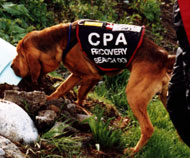
M: Your fondness for dogs is evident. How did you research the science of tracking/search and rescue dogs?

JB: My awareness of what were then called cadaver dogs but are now called human remains detection dogs (HRD dogs) and search and rescue dogs (SAR dogs) grew out of a lecture I heard at a training program on forensic anthropology. They dogs were mentioned as a way in which clandestine graves and other locations of remains could be discovered. Soon I was pestering my forensic anthropologist friends for more information, and they put me in touch with some of the best dog handlers in the country, several of whom have since become friends.

I also read scientific studies and books about these dogs, and attended sessions at forensic conferences about them, but the best part was talking to the handlers and at one point going out to a muddy field with a team and their dogs — a body in an advanced state of decomposition had been found on the site the day before, so it was an opportunity to teach the dogs (and me). I've met some wonderful dogs, too! I was also allowed to become part of a list about SAR and HRD dogs, so I heard lots of different perspectives there.


M: Irene is a crime reporter and her husband Frank is a police detective. Did you do any field research on detectives and police departments?

JB:
Yes, I have been fortunate to form friendships with people in law enforcement and forensic science over the years. In the time since I started writing, one of my nephews has become a detective with a department in Southern California, so he now gets stuck with answering a lot of weird questions. But especially for new writers out there, I want to emphasize that I am careful about not wasting the time of overworked officers and detectives. I research whatever I can the old-fashioned way — I read, I take courses, I go to libraries. I buy textbooks used to train officers. I read publications like the FBI's Law Enforcement Bulletin. I contact public information officers.

So after I've done all I can to find answers and get background, when I'm ready for the little details that tell so much, that's when I contact people in law enforcement and ask for their time. I've found that they appreciate that I am not asking them questions that can be answered with a quick Google search or by reading Lee Lofland's Police Procedure and Investigation.

One part of research is building relationships, and to do that, you have to establish trust and respect. Doing your homework first is part of showing respect.


M: Is Las Piernas, where Irene lives and works, based on a specific town?

JB: It most closely resembles Long Beach, California, but it is definitely fictional. Please don't, as some have done, go looking for the leg-shaped cliffs off the Long Beach coastline — even though you'll have a nice place to sail while you do it. I've dragged in topography from as far away as San Clemente. There's some Laguna Beach, Seal Beach, and Venice Beach in Las Piernas. To the best of my knowledge, among these places, only Las Piernas has a zoo, although you could make a good argument for the Venice boardwalk counting as one.


Stay tuned for Part 2 of this interview tomorrow! 

* (Interview originally published on Stuff and Nonsense 13 June 2011)

09 March 2012

Countdown to Left Coast Crime: Day 20

Poison Flower by Thomas Perry.*

Reviewed by Marlyn Beebe.

When Jane Whitefield married Dr. Carey McKinnon, they both hoped that she could leave behind the former life where she helped people disappear. It worked, for a while. She became a model surgeon's wife: working on committees and raising money for the hospital. They thought about having a child. But eventually, someone desperately needed her help and she couldn't say "no". As Carey thinks to himself at one point during the story

"To her, saving people was just something a person did, if she happened to have the skills".
This book begins with the third "runner" Jane has helped since her marriage. James Shelby was framed for the murder of his wife. The people who set him up try to have him killed in prison, and he is taken to court to testify against his attacker.

Posing as an attorney, Jane helps him escape, then acting as a decoy,she is captured, taken to a remote warehouse and tortured. She manages not to reveal where James is, but her captors do learn who she is. When they discover that many powerful people would like to get revenge against her, they decide to auction her off to the highest bidder.

Jane Whitefield makes all of her cunning and intelligent moves seem like simple common sense. She is so attuned to the world around her: the people, the animals, trees and even physical structures, that she is able to anticipate almost exactly what will happen in any situation. Her actions are almost always calm and measured and planned. She has the enviable ability to focus on whatever task she happens to be doing, yet still remain aware of her surroundings.

Many of these traits can be ascribed to her upbringing as a Seneca, and her study of Native American history and folklore. It's only a tiny spoiler to reveal that there's a wonderful chapter in the book when Jane goes to the riverbank and gives a tribute to the Jo-Ge-Oh, the little people, as thanks for helping her to return alive.

Make sure to set aside a block of time to read this book. Once you open it, you won't want to put it down until you reach the end.

*FTC Full Disclosure: Many thanks to the publisher, and to NetGalley for providing me an e-galley to review.


Thomas Perry was born in Tonawanda, New York. He received a B.A. from Cornell University and Ph.D. from the University of Rochester. His many and varied jobs include  park maintenance man, factory laborer, commercial fisherman, university administrator and teacher, and television writer/producer.  The Butcher's Boy won the Edgar award for Best First Novel in 1983.  Vanishing Act (1996) the first Jane Whiteifield novel, was chosen as one of the 100 Favorite Mysteries of the 20th Century by the Independent Mystery Booksellers Association.

08 March 2012

Countdown to Left Coast Crime


Left Coast Crime 2012: Mining for Murder begins on March 29, 2012.

For those of you who can count, that's 21 days from today.

Starting tomorrow, I'm going to be featuring authors who will be at the convention.  Most likely, there will be book reviews, and possibly some informal Q & As or mini-biographies.

Stay tuned!!


30 January 2012

Left Coast Crime Award Nominees

There are four awards presented at the annual Left Coast Crime banquet.  The short-list of nominees was announced earlier this morning:

The Lefty has been awarded for the best humorous mystery novel since 1996. This year’s nominees are:

  • Donna Andrews, The Real Macaw (Minotaur)
  •  Rita Lakin, Getting Old Can Kill You (Dell)
  •  Jess Lourey, October Fest (Midnight Ink)
  •  Kris Neri, Magical Alienation (Red Coyote Press)
  •  Cindy Sample, Dying for a Dance (L & L Dreamspell)
  •  John Vorhaus, The Albuquerque Turkey (Crown)

The Bruce Alexander Memorial Historical Mystery Award, first awarded in 2004, is given to mystery novels covering events before 1960. This year’s nominees are:

  •  Rhys Bowen, Naughty in Nice (Berkley Prime Crime)
  •  Rebecca Cantrell, A Game of Lies (Forge)
  •  Ann Parker, Mercury’s Rise (Poisoned Pen Press)
  •  Priscilla Royal, A Killing Season (Poisoned Pen Press)
  •  Jeri Westerson, Troubled Bones (Minotaur)
  •  Jacqueline Winspear, A Lesson in Secrets (Harper)


The Golden Nugget is a special award given to the best mystery set in California, in recognition of the location of this year’s convention. The nominees are:

  •       Jan Burke, Disturbance (Simon & Schuster)
  •       Michael Connelly, The Drop (Little, Brown)
  •       Janet Dawson, Bit Player (Perseverance Press)
  •       Sue Grafton, V Is for Vengeance (Putnam)
  •       Kelli Stanley, City of Secrets (Minotaur)

Eureka! is a special award this year for the best first mystery novel. The nominees are:

  •  Sally Carpenter, The Baffled Beatlemaniac Caper (Oak Tree Press)
  •  Darrell James, Nazareth Child (Midnight Ink)
  •  Tammy Kaehler, Dead Man’s Switch (Poisoned Pen Press)
  •  Rochelle Staab, Who Do, Voodoo? (Berkley Prime Crime)

Congratulations, and good luck to all the nominees!

04 April 2011

New (ad)ventures

Left Coast Crime in Santa Fe turned out to be the birthplace of a couple of big new things in my life.

Firstly, at lunch with my novelist friend L.J. Sellers and some of her friends (Judith Yates Borger, Peg Brantley, Andrew E. Kaufman, and Jodie Renner) casually mentioned the popularity of collaborative blogs, and suggested that perhaps we should start one.

Later that night, over dinner, the subject arose again, and the discussion continued over drinks, and a new collaborative blog began to take shape. Once we all returned home, the ideas continued to flow, the new baby was named Crime Fiction Collective and a launch date of Monday, April 18 (that's two weeks from today folks!) was set. Stay tuned...

And my other big news is that I registered for Left Coast Crime 2012 in Sacramento. Offering to help with the planning, I was asked what I was interested in. Upon hearing my answer "programming", conference co-chair Cindy Sample asked how I felt about co-chairing the programming committee. After a little bit of sputtering and stuttering, I agreed. And just like that, I am co-chair of the programming committee for Capitol Crimes!

I'm a little nervous about all the work I have ahead of me with my two new projects, but mostly I'm thrilled and excited!

LinkWithin

Related Posts Plugin for WordPress, Blogger...